Black History Month
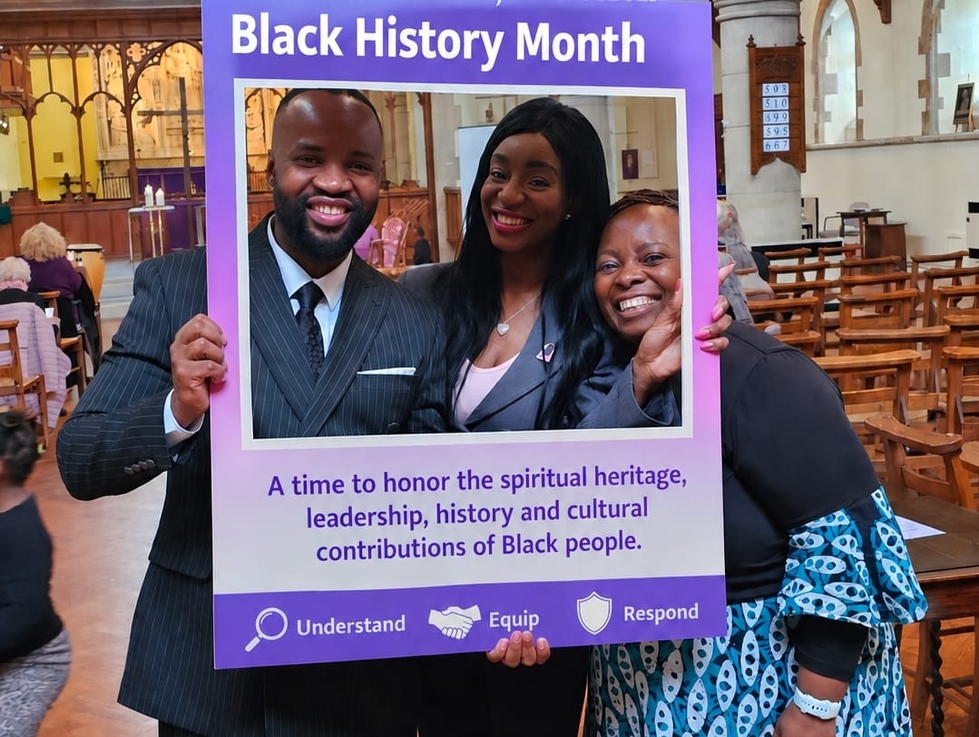
This year, the Diocese will mark Black History Month in October with a special programme of events exploring the theme “Black History in Church Spaces.” The celebrations will bring together parish communities, and friends from across the Diocese to remember, learn from and celebrate the stories of Black people whose lives, faith and contributions are woven into the history of the Church and wider British society.
Black History in Church Spaces - bookings are now open
Black History Month will open with an exhibition at St Luke’s Prestonville on Saturday 3 October 2026 at 2:00 pm ( book here) and close with a commemorative service at St Mary’s Slindon on Sunday 25 October 2026 at 11:00 am, after which there shall be a dedication of the plaque of Roque Ferdinand at St Mary Magdalene Church, Madehurst.(book here) marking the historic memorial to Roque Ferdinand, a servant and formerly enslaved man whose memorial is one of the very few surviving eighteenth century memorials to a Black man in a Sussex parish church.
Black History Month provides an opportunity to recognise the contribution of Black communities and to promote a fuller and more inclusive understanding of British history. Within the life of the Church, it also offers an opportunity to remember how God has enabled Black women, men and children to use their God given gifts to enrich, strengthen and revitalise the Church.
Churches have always been places of memory. They tell stories through stained glass, memorials, monuments, plaques, paintings and even through the names and lives we choose to remember and honour. These spaces speak to us about faith, sacrifice, courage, hope and community.
This year, the Diocese is using its own local history and context to tell and celebrate the stories, witness and legacy of Black men and women whose lives are woven into the history of our Diocese and the wider Anglican Communion.
An Exhibition of Stories, Faith and Memory
The exhibition at St Luke’s Prestonville will explore a number of significant stories that connect Black history, faith and church spaces.
One of these is the story of the SS Mendi, the troopship that sank in 1917, resulting in the deaths of more than 600 Black South African servicemen. Their sacrifice is remembered through a memorial plaque at St John the Evangelist Church, Newtimber.
The exhibition will also explore Project Spire, the Church of England’s work for healing, justice and repair, reflecting on the Church’s responsibility to confront difficult histories and pursue a more just future.
The life and witness of Olaudah Equiano, the Black abolitionist and Christian, will also feature. Equiano’s experiences and his campaign against slavery remind us of the powerful role that Christian faith and church communities played in shaping the movement for the abolition of slavery.
The exhibition will tell the story of Roque Ferdinand, a servant and formerly enslaved man whose eighteenth century memorial provides a rare and significant record of Black presence within a Sussex parish church. His story invites us to ask who has been remembered in our churches, whose stories have been overlooked and how we can broaden the stories we tell.
The exhibition will also remember the Uganda Martyrs, 45 Christian converts, including 23 Anglicans and 22 Catholics, who were executed for their Christian faith. Their story is one of courage, conviction and sacrifice. It also connects with the life of Bishop James Hannington, who was killed in Uganda. The Uganda Martyrs were later recognised as saints.
We ask you, please, do book for this event for catering purposes, as refreshments and African food will be served after - book here
Concluding Services at St Mary Slindon and St Mary Madehurst
Black History Month will conclude with a Commemorative Service at St Mary’s Slindon at 11:00 with special guests, followed by African and English cuisine, before making our way in the afternoon at St Mary's Madehurst nearby at 15:00 to witness the unveiling and installation of the interpretive panel next to the Roque Ferdinand memorial plaque in the church. This will be followed by prayers, and a blessing of the memorial and interpretation as a way of marking and remembering this important history. Please do book here for catering purposes.
Together, these stories demonstrate that Black history is not separate from the history of the Church. It is part of our shared story of faith, witness, struggle, sacrifice and hope. You can view and download the programme here
Keynote Speakers for Black History Month
The keynote speaker for the exhibition will be Kwesi Ochosi, Project Coordinator and Archivist at Lambeth Palace Library, who will help us explore the importance of archives, memory and the stories preserved within the Church.
The service at Slindon will feature Professor Alan Lester of the University of Sussex as guest speaker, alongside Alysia Lara, Interim Deputy Director of Racial Justice. Together, the service will provide an opportunity for prayer, remembrance and reflection as we consider how the Church remembers its past and how that memory can shape its future.
Resources for Parishes and Schools
Black History Month is not only an opportunity for one special event. It is an invitation for parishes and schools across the Diocese to engage with Black history throughout the month and beyond.
Churches Together in Britain and Ireland has also brought together a collection of resources to support churches and schools, including sermons, prayers, Bible readings, songs, poems and activities. These resources provide practical ways for communities to explore Black history through worship, learning and reflection.
We warmly encourage our parishes and schools to join us in marking Black History Month, using these resources and creating opportunities to listen, learn and celebrate.
As the Church, we are a people drawn from many nations, tribes, peoples, languages and colours, yet united in Christ. Black History Month reminds us that every story matters, every person bears the image of God and every community has a contribution to make to the life of Christ’s Church.
We look forward to gathering together to remember, celebrate and give thanks for the rich and diverse heritage of the Church, and to continue building a Church where every person’s story can be seen, heard and valued.
If you would like to make a contribution to this event please contact: Vitalis Ngwambi, the Diocesan Racial Justice Co-ordinator - he can be reached on his email: vitalis.ngwambi@chichester.anglican.org
Here are some ways churches can participate in Black History Month 2026:
1. Invite Black Preachers and Leaders: Churches can welcome Black preachers, worship leaders, and theologians to share their perspectives and experiences throughout the year.
2. Share Impactful Stories: Churches can present stories of impactful individuals such as Pastor Daniels Ekarte and other Black leaders working in justice and mission.
3. Liturgical Resources: Utilize liturgical resources for Black History Month, including services of the Word, Eucharistic services, prayers of lament, and commission, as well as additional resources for Bible studies, youth work, Messy Church, and music.
4. Legacy Reflection: Reflect on legacy through the Everyday Faith app, exploring different aspects of legacy based on the names' meanings and sharing experiences to shape the future.
5. Racial Justice Offerings: Watch offerings on Racial Justice, such as short films by Testament, which speak to the presence of racism within the context of the church and the contemporary Christian experience.
6. These activities not only honor the contributions of Black people but also commit to justice and unity within the church community